
Our Services
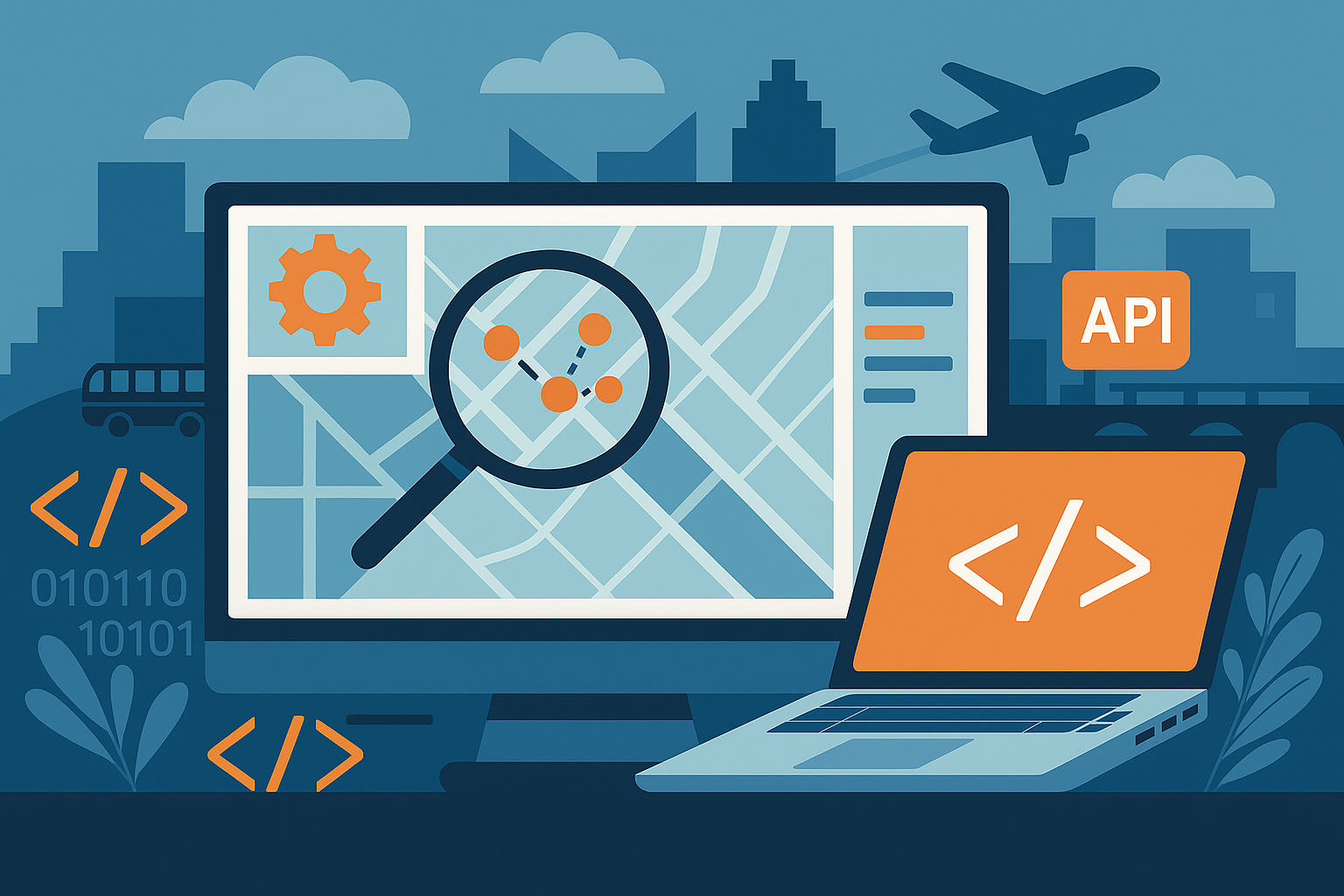
Transportation Modelling, Scripting and APIs
Transportation modelling is the process of creating digital simulations of real-world transport systems — such as road networks, public transit, and pedestrian flows — to analyze, predict, and optimize mobility patterns.
It helps governments, transit agencies, and private firms make better decisions about infrastructure investments, traffic management, and service improvements.
While transportation modelling software provides powerful tools, custom scripts and APIs dramatically enhance what these platforms can do:
- Automation: Save time by automating repetitive tasks like scenario creation, calibration, and reporting.
- Customization: Tailor analyses to your specific needs instead of relying only on built-in software functions.
- Integration: Connect your models to external data sources (GPS, mobile apps, IoT, etc.) for richer, real-time inputs.
- Innovation: Build new features, advanced analyses, or specialized workflows that wouldn't otherwise exist.
Our past work includes many different modelling projects in commercial (Aimsun, EMME, VISSIM) and open-source software (SUMO, MATSIM), in Canada, the United-States, Europe and beyond, including specialized APIs, such as the HERO ramp-meter algorithm which improves real-time freeway operations in the San Diego Aimsun Model.
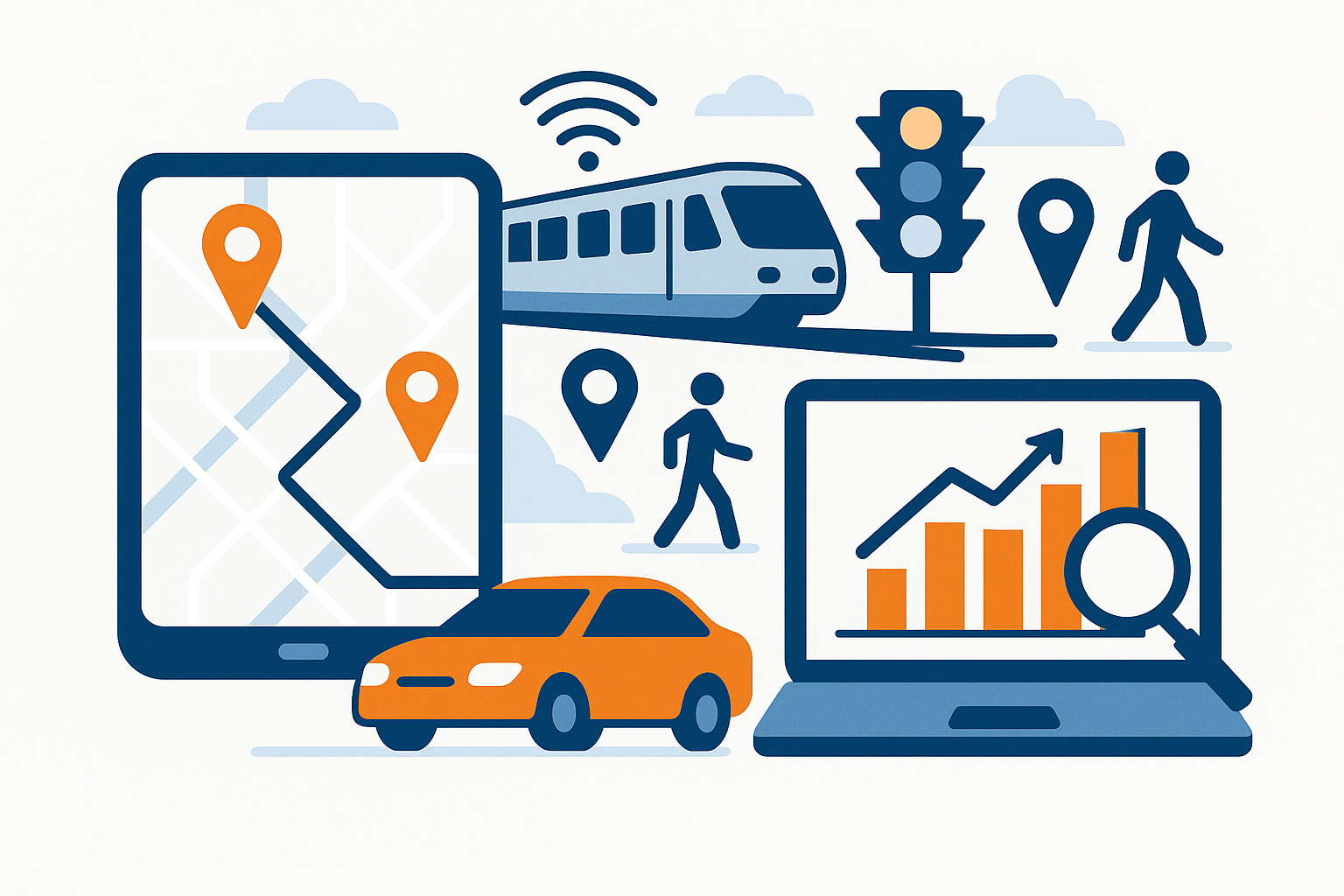
Transportation Data Acquisition and Management
Transportation data acquisition and management involves collecting, organizing, and analyzing mobility-related information — such as vehicle movements, transit operations, and pedestrian flows — to better understand and improve transportation systems.
With advances in technology, data now comes from many sources: GPS devices, mobile apps, smart infrastructure, and public transit systems.
Custom data acquisition methods and management strategies provide major advantages:
- Accuracy: Tailor data collection to capture exactly the information your project requires.
- Efficiency: Automate data gathering, cleaning, and integration processes, saving significant time and effort.
- Insight: Manage large datasets effectively to uncover trends, inefficiencies, and improvement opportunities.
- Decision Support: Deliver high-quality, reliable data to support operational changes and strategic planning.
Our past work includes the mobile app MTL Trajet initiative for the City of Montréal, and the Port de Montréal's Trucking PORTal, which improves real-time freight operations through integrated GPS and logistics data.

Traffic Signal Optimization & Transit Signal Priority
Traffic signal optimization involves adjusting traffic light timings and coordination to improve traffic flow, reduce congestion, and enhance safety for all road users — vehicles, buses, cyclists, and pedestrians.
When combined with transit signal priority (TSP) strategies, traffic management systems can also actively favor public transit vehicles at intersections, helping buses and trams maintain their schedules and improving service reliability.
Custom optimization and TSP solutions offer major advantages:
- Efficiency: Reduce overall travel time, vehicle idling, and emissions through smarter signal timing.
- Public Transit Reliability: Improve bus and tram punctuality without significantly disrupting general traffic.
- Flexibility: Adapt signal plans dynamically based on time of day, real-time conditions, or operational goals.
- Data-Driven Results: Use field data and modelling to design, simulate, and fine-tune signal strategies for maximum impact.
Our past work includes creating transit signal priority guidelines for the Société de Transport de Laval which improved travel times and reliability for both buses and other road users.